Wellness, Auto-Immune Disease, Anti-Aging, Gut
Why Your Gut is Foundational to Your Health
Topics for this Article:
- What is the gut
- Why gut health is important
- How to know if your gut is healthy
- Signs of an unhealthy gut
- Conditions and disorders involving the gut
- Simple Ways to Support Your Gut Health
In today’s article, you will learn basics about the gut, what it is, why it is important, how to know if your gut is healthy or unhealthy, conditions caused by an unhealthy gut, and simple ways to support our gut health.
In future articles you will learn the nitty gritty of what may be causing YOUR gut problems and what YOU can do to heal your gut.
What is the Gut?
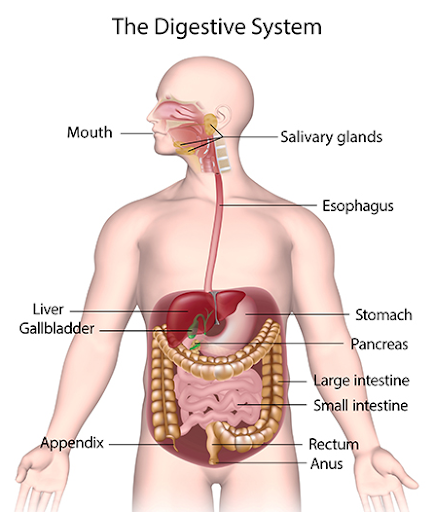
The gut is just another word for the digestive system, and it is made up of hollow organs and solid organs. The hollow organs make up the tube where food enters the body and eventually leaves the body as poop.
- Mouth - chews food, mixes it with saliva which start the digestion process of breaking down the food. 👄
- Esophagus - tube that transports food from the mouth to the stomach.
- Stomach - Mixes up the food with enzymes to start breaking it down.
- Small intestine - Absorbs nutrients like carbohydrates, proteins, fats, vitamins, and minerals.
- Large intestine - Houses a large portion of your microbiome. The bacteria that makes up the microbiome are responsible for things like producing vitamin K and multiple B vitamins. The large intestine also absorbs excess water and forms the stool prior to it leaving the body.
- Anus - The muscle that allows us to control our bowel movements and let the stool pass into the toilet. It also keeps us from pooping our pants when it isn’t a good time to poop. 💩
The solid organs include:
- Liver - makes and secretes bile, filters blood, removes toxins and waste.
- Pancreas - produces enzymes to help digest and metabolize the food.
- Gallbladder - stores and concentrates bile from the liver. Bile is important for breaking down fats into fatty acids your body can use for important processes like energy, thinking, memory, learning, forming cell membranes, skin health, hormone production, and more.
Why Is Gut Health Important?
The importance of gut health extends far beyond digestion. It plays a crucial role in almost every aspect of your health:
- Digestion and Nutrient Absorption: The gut is responsible for breaking down the food you eat and absorbing the nutrients your body needs to function. Poor gut health can lead to malabsorption, nutrient deficiencies, and various digestive issues like acid reflux, bloating, constipation, and diarrhea.
- Immune Function: Did you know that around 70% of your immune system is located in your gut? A healthy gut helps regulate immune responses, protecting you from infections and diseases. When gut health is compromised, it can lead to a weakened immune system and increase susceptibility to illnesses.
- Mental Health: The gut is known as the second brain. The gut has bacteria that produce neurotransmitters, like serotonin. Serotonin influences mood and mental well-being, linking it to mental health challenges like anxiety and depression. The gut and the brain communicate closely via the vagus nerve
- Metabolism: Your gut bacteria can affect if you feel full or hungry and how much of your food is stored as fat.
- Energy and Cellular Function: A healthy gut extracts nutrients from food needed for energy and healthy cells.
- Hormones: The gut microbiome influences estrogen, progesterone, cortisone, and other hormones.
- Barrier: The gut provides a barrier that prevents pathogens from entering the bloodstream.
- Chronic Diseases: Poor gut health has been associated with ALL of the various autoimmune diseases, type 2 diabetes, heart disease, obesity, and more.
How Do You Know If Your Gut Is Healthy?
- Your belly is pain free for starters.
- You can expect regular, formed bowel movements (BM) that pass easily
- Your BMs should provide a sense of relief to your body
- You should ideally be having one to four BMs a day
- Absence of unpleasant symptoms like: acid reflux, bloat, gas, constipation, or diarrhea
Of course, when the gut is out of balance—due to factors like poor diet, stress, or illness— it can lead to a range of health problems, from digestive issues all the way up to chronic diseases.
Signs of an Unhealthy Gut
How can you tell if your gut is in trouble? Here are some common signs of poor gut health:
- Digestive Issues: Frequent acid reflux, bloating, gas, constipation, or diarrhea
- Food Intolerances: Difficulty digesting certain foods can lead to symptoms like cramping or nausea.
- Skin Problems: Conditions like acne, eczema, or psoriasis can be linked to gut inflammation or a leaky gut.
- Frequent Infections: A weakened immune system due to poor gut health can make you more prone to colds and infections.
- Autoimmune issues: This is where the body’s immune system is attacking itself.
- Fatigue: Chronic exhaustion can be a sign that your gut is not absorbing nutrients efficiently. An unhealthy gut microbiome (known as dysbiosis) can impact the mitochondria (often referred to as the “battery packs” of the cells).
Conditions and Disorders Involving the Gut
- Irritable bowel syndrome, constipation, diarrhea
- Anxiety and depression
- Chest pain, not related to the heart
- Chronic stress
- Chronic fatigue
- Chronic pain
- Obesity
- Autoimmune disorders
- More
Simple Ways to Support Your Gut Health
Improving gut health is a journey that involves making dietary and lifestyle changes. We will discuss that more in future articles. In the meanwhile, some simple things that can be done to support your gut are:
- Chew Your Food: Research suggests chewing each bite 32 times is the sweet spot, but you don’t have to count. Just chew the food until it is liquified, and you can be certain that it is ready for the next step of digestion. Properly mixing your food with saliva helps it break down better at the next step in your stomach.
- Eat a Diverse Diet: Incorporate a variety of fruits, vegetables, whole grains, and fermented foods to support a healthy microbiome (assuming your body tolerates this well).
- Elimination Diet: If you suffer from a lot of gut symptoms (bloat, belching, acid reflux, gas, diarrhea, constipation, abdominal cramping), you may want to consider an elimination diet. Eight foods cause 90% of the adverse reactions. These are wheat, milk/dairy, eggs, tree nuts, fish, shellfish, soy, and sesame. Of course, alcohol is well known for damaging the gut. There are more extreme food elimination diets (like the carnivore diet) that can be considered for some people as well as food sensitivity testing. However, many people find relief from just eliminating some or all of these main culprits.
- Stay Hydrated: Water helps with digestion and keeps things moving through your GI tract. There is a lot of discussion about whether water should be drunk with or without food. I recommend doing what feels right for your body. If drinking water with food causes you symptoms, then drink it away from meals.
- Manage Stress: Chronic stress can negatively impact gut health, so it’s essential to find ways to relax and unwind. Tried and true ways are prayer and meditation, taking a relaxing walk after meals, spending time with friends and family who you have a good time with.
- Get Enough Sleep: Quality sleep is crucial for overall health, including gut health.
-
Consider Adding in Some Digestive Enzymes: If you suffer from bloat, gas, belching, diarrhea, oily stools, unexplained weight loss, abdominal cramping (especially after eating), nausea or vomiting, heartburn, loss of appetite, or fatigue. Enzymes I use personally are Practitioner Grade Supplements. If you are interested, you can purchase here:
- CT Zymes from CellCore: Create an account here, purchase CT Zymes inside the site.
- DigestZymes from Designs for Health: Get a 20% Discount off first order (even if you choose to purchase extra products) - use coupon code JACKPOT20
Conclusion
Your gut health is foundational to your overall well-being. By starting with healing your gut, you are setting your body up to be in a good position to heal other health issues. In the coming weeks, we are going to be diving deep into what can go wrong with the gut, why this matters, and how to fix your gut so you can set yourself for optimal health.
References
Azzouz, L. L., & Sharma, S. (2023, July 31). Physiology, Large Intestine. PubMed; StatPearls Publishing. https://www.ncbi.nlm.nih.gov/books/NBK507857/#:~:text=The large intestine has 3
Carding, S., Verbeke, K., Vipond, D. T., Corfe, B. M., & Owen, L. J. (2015). Dysbiosis of the gut microbiota in disease. Microbial Ecology in Health & Disease, 26(0). https://doi.org/10.3402/mehd.v26.26191
Cleveland Clinic. (2023, September 20). What To Know About the Gut-Brain Connection. Cleveland Clinic. https://my.clevelandclinic.org/health/body/the-gut-brain-connection
Duca, F. A., Swartz, T. D., Sakar, Y., & Covasa, M. (2012). Increased oral detection, but decreased intestinal signaling for fats in mice lacking gut microbiota. PloS One, 7(6), e39748. https://doi.org/10.1371/journal.pone.0039748
Flint, H. J., Scott, K. P., Duncan, S. H., Louis, P., & Forano, E. (2012). Microbial degradation of complex carbohydrates in the gut. Gut Microbes, 3(4), 289–306.
Fujisaka, S., Watanabe, Y., & Tobe, K. (2022). The gut microbiome: a core regulator of metabolism. Journal of Endocrinology, 256(3). https://doi.org/10.1530/joe-22-0111
Harvard Medical School. (2017). The Gut and the Brain. Hms.harvard.edu. https://hms.harvard.edu/news-events/publications-archive/brain/gut-brain#:~:text=The enteric nervous system that
He, S., Li, H., Yu, Z., Zhang, F., Liang, S., Liu, H., Chen, H., & Lü, M. (2021). The Gut Microbiome and Sex Hormone-Related Diseases. Frontiers in Microbiology, 12. https://doi.org/10.3389/fmicb.2021.711137
Information, N. C. for B., Pike, U. S. N. L. of M. 8600 R., MD, B., & Usa, 20894. (2016). How does the stomach work? In www.ncbi.nlm.nih.gov. Institute for Quality and Efficiency in Health Care (IQWiG). https://www.ncbi.nlm.nih.gov/books/NBK279304/#:~:text=The stomach is a muscular
Mayer, E. A. (2011). Gut feelings: the emerging biology of gut–brain communication. Nature Reviews Neuroscience, 12(8), 453–466. https://doi.org/10.1038/nrn3071
National Institute of Diabetes and Digestive and Kidney Diseases. (2017). Your Digestive System & How it Works | NIDDK. National Institute of Diabetes and Digestive and Kidney Diseases. https://www.niddk.nih.gov/health-information/digestive-diseases/digestive-system-how-it-works#:~:text=The hollow organs that make
Sekirov, I., Russell, S. L., Antunes, L. C. M., & Finlay, B. B. (2010). Gut microbiota in health and disease. Physiological Reviews, 90(3), 859–904. https://doi.org/10.1152/physrev.00045.2009
Conclusion
Your gut health is foundational to your overall well-being. By starting with healing your gut, you are setting your body up to be in a good position to heal other health issues. In the coming weeks, we are going to be diving deep into what can go wrong with the gut, why this matters, and how to fix your gut so you can set yourself for optimal health.
© Jackpot Wellness. All Rights Reserved.