Wellness, Auto-Immune Disease, Anti-Aging, Gut
Your Gut Microbiome Can Improve Your Energy
Did you know that your gut microbiome supports all of your cells’ ability to make energy by supporting your mitochondria?
That’s right! Your mitochondria are the battery packs of your cells. They are where you get a lot of your energy from. By supporting your friendly gut bacteria, you are supporting your mitochondria which will give you more energy.
The Gut Microbiome and Mitochondrial Function
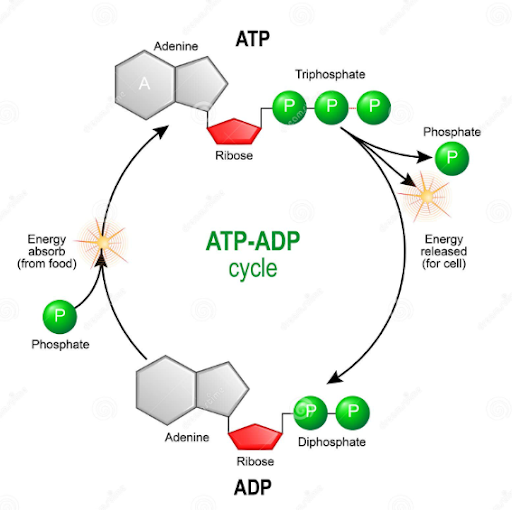
For those of you who have not learned about mitochondria yet, they are famous for being the powerhouses of your cells. These are organelles that actually live inside the cells and function as the main cellular energy-generating system. Mitochondria are responsible for producing energy in the cells. They do this by using the “energy currency” of your cells called adenosine triphosphate (ATP). The cycle of ATP energy goes like this:
- One of the three phosphate atoms breaks off of the ATP molecule.
- Energy is released (along with a whole bunch of other metabolic cellular functions that we won’t get into today).
- ATP now has one less phosphate molecule, so it is called adenosine diphosphate (ADP).
- ADP then recharges back into ATP through the process called phosphorylation.
- Then the cycle repeats.
Microbial Production of Short-Chain Fatty Acids (SCFAs)
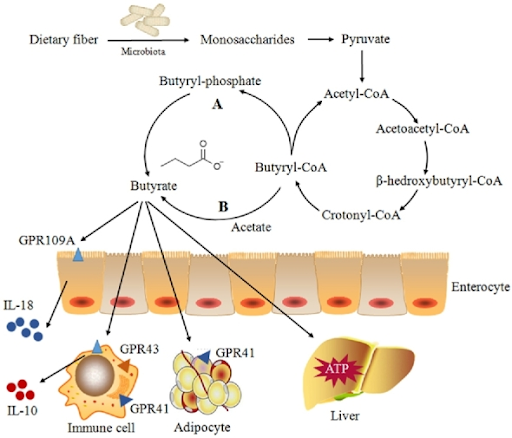
Your friendly gut bacteria has its own metabolic processes that take place when it eats the fiber in your gut. One metabolite released by your gut bacteria is called butyrate. Butyrate is a small chain fatty acid (SCFA) that is produced when the friendly bacteria eat and cause certain dietary fibers to ferment. It benefits your energy levels by supporting your mitochondria that live in your cells. Some ways SCFA benefit your mitochondria are:
- Enhances mitochondrial efficiency
- Provides an energy source for your mitochondria
- Promotes mitochondrial respiration and ATP production
- Reduces oxidative stress in mitochondria by regulating antioxidant defenses.
What happens with oxidative stress? It is like rusting from the inside out. Some people are more genetically predisposed to suffer from oxidative stress than others. I have tested my genetics, and I am more likely to have oxidation (or “rust” internally) than the average person. The exciting thing is that our lifestyle and supplement choices can help protect us and slow down any internal rusting. Our genes do not have to create our destiny. We can live a much healthier life by influencing how our genes are expressed even when we are predisposed to deterioration from things like oxidative stress.
Mitochondrial Formation
The gut microbiome influences how your mitochondria are formed in your cells. Certain gut bacteria, such as Akkermansia muciniphila, have been associated with enhanced energy metabolism through improved mitochondrial function and increased mitochondrial density in muscle cells.
This is one reason that I don’t believe that being on a strict carnivore diet for years is optimal for your body. The carnivore diet is very effective at reducing inflammation for people who have a lot of food sensitivities, gut inflammation, and issues with leaky gut. However, since it does not provide enough support for our friendly bacteria to thrive, it doesn’t make sense as a long-term solution to gut issues.
Improved Mitochondrial Fitness
Another way that our friendly gut bacteria support our energy needs is by metabolizing nicotinamide riboside into nicotinic acid. Nicotinic acid is a precursor to nicotinamide adenine dinucleotide (or NAD). You may have heard of NAD. It has become very popular in recent years in oral and even IV supplementation because it plays a key role in the overall fitness level of your mitochondria. Aside from improving energy, NAD does a lot of other things to improve health. Here are just a few:
- Helps maintain cellular function and protect neurons from oxidative stress
- Helps regulate your circadian rhythm
- Improves skin health and prevents premature aging. We all want that, right?
How Can You Support Your Friendly Bacteria?
Well, Everyone’s gut is different, so what works for one person may cause bloat, constipation, or diarrhea in another.
However, here are some quick tips.
- Butyrate is very easy on the gut and generally very well tolerated. It can be quite healing to the gut and support a balance among the friendly gut bacteria.
- If you have only a small amount of gut issues or your gut is already feeling pretty good and you just want to support it, then make a point of getting daily dietary fiber. You can do this by eating a lot of veggies and some lower glycemic fruits, beans or legumes, and other high fiber foods. Fiber can also be taken as a supplement. I like this fiber supplement. The important thing is to look for fiber that is organic and “digestion resistant” for the bacteria to feast on.
- If you are sensitive to fiber, meaning you get gassy or bloated, then go slow. You can start with whatever amount you can tolerate and increase with time. Pay attention to what your body doesn’t like and what it responds well to.
The goal is to eventually be hitting a rainbow of colors that come from foods that are agreeable to your body. By having a variety of colors, you will be providing lots of fiber as well as different nutrients for your body to work with. You want to work up to 30 grams of fiber per day. You can also add in some fermented foods to introduce new bacteria species to your gut.
If these basic ideas are not working well for you, then you may have some deeper work to do. You may want to get some testing done or try an elimination diet. You may also want to consider working with a professional.
I hope you can see how your friendly gut bacteria are critical for your battery packs of your cells, known as the mitochondria. By supporting the health of your friendly bacteria, you are allowing your body to recharge its own batteries so it can provide you with the energy you need to chase your kids or grandkids, do that workout, be productive at work, make time for your spouse, and have a night out with friends.
References
Borbolis, F., Mytilinaiou, E., & Palikaras, K. (2023). The Crosstalk between Microbiome and Mitochondrial Homeostasis in Neurodegeneration. Cells, 12(3), 429. https://doi.org/10.3390/cells12030429
Donohoe, D. R., Garge, N., Zhang, X., Sun, W., O’Connell, T. M., Bunger, M. K., & Bultman, S. J. (2011). The microbiome and butyrate regulate energy metabolism and autophagy in the mammalian colon. Cell Metabolism, 13(5), 517-526. https://doi.org/10.1016/j.cmet.2011.02.018
Dunn, J., & Grider, M. H. (2023, February 13). Physiology, adenosine triphosphate (ATP). PubMed; StatPearls Publishing. https://www.ncbi.nlm.nih.gov/books/NBK553175/
Peng, L., Li, Z. R., Green, R. S., Holzman, I. R., & Lin, J. (2009). Butyrate enhances the intestinal barrier by facilitating tight junction assembly via activation of AMP-activated protein kinase in Caco-2 cell monolayers. Journal of Nutrition, 139(9)
Sauve, Anthony A. “Metabolic Disease, NAD Metabolism, Nicotinamide Riboside, and the Gut Microbiome: Connecting the Dots from the Gut to Physiology.” MSystems, 25 Jan. 2022, https://doi.org/10.1128/msystems.01223-21
Zhou, Kequan. “Strategies to Promote Abundance of Akkermansia Muciniphila, an Emerging Probiotics in the Gut, Evidence from Dietary Intervention Studies.” Journal of Functional Foods, vol. 33, 1 June 2017, pp. 194–201, www.ncbi.nlm.nih.gov/pmc/articles/PMC6223323/, https://doi.org/10.1016/j.jff.2017.03.045
© Jackpot Wellness. All Rights Reserved.